








Charter of Foshan Shunde Wonder School
Chapter I General Provisions
Article 1 Name and nature of the school
Name: Foshan Shunde Wonder School (formerly Shunde No.1 Middle School Experimental School)
Nature: A full-time private complete secondary school under the Shunde District Education Bureau.
Article 2 Educational goals: to uphold all-round development, bring out individual strengths, cultivate creative abilities, and produce talents with the "four abilities" (to conduct oneself, to seek knowledge, to get things done, and to keep fit), and to build the school into a high-quality, distinctive prestigious school.
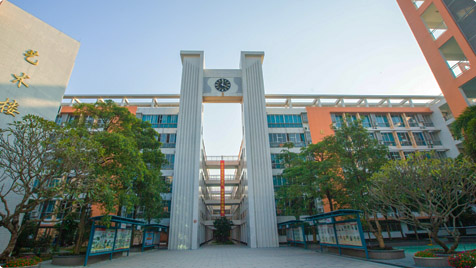
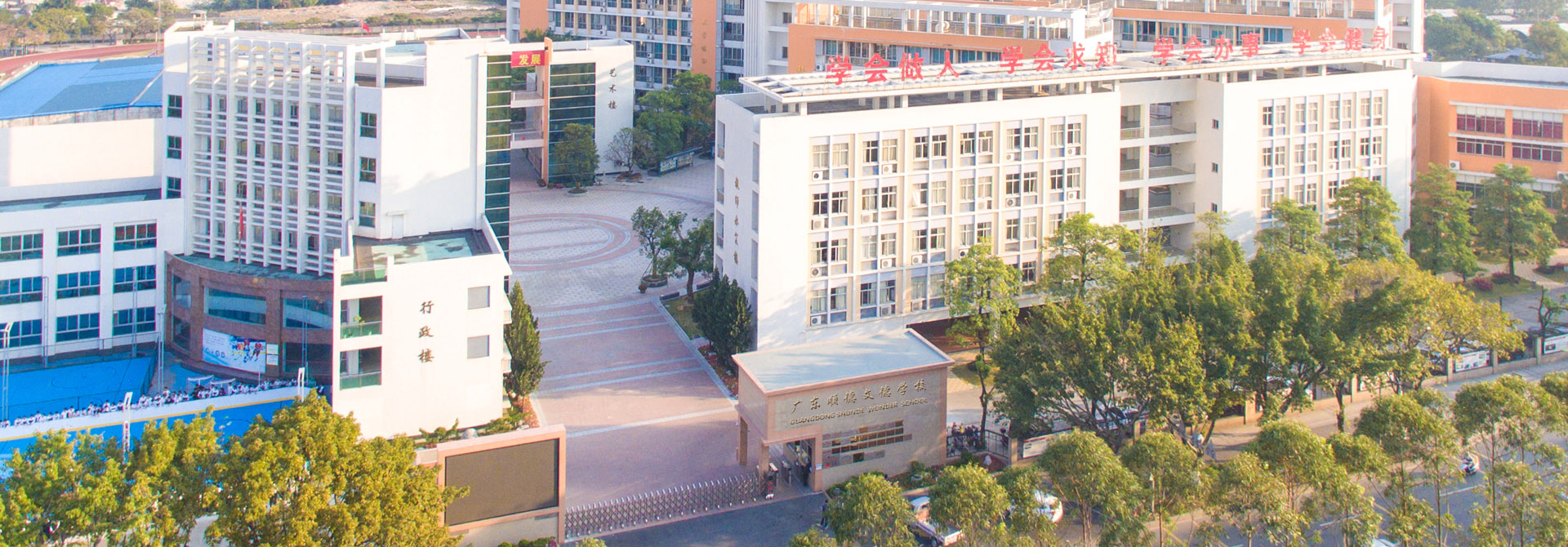
Article 3 School development goal: to make the school a high-standard, modern new-type school with a beautiful environment, good ethos, advanced facilities and an excellent faculty.
Article 4 School management goal: to be people-oriented, run the school by law and manage it scientifically, form a complete system, foster a fine ethos of learning, teaching and conduct, maintain a clean, quiet and civilized campus, and become a modern school full of cultural atmosphere.
Article 5 Basic policy of running the school: to base on national education policy, be guided by relevant educational theories, take moral education as the orientation, teaching as the center, and the cultivation of people as the foundation.
Article 6 Educational philosophy: to seek development through reform, survival through quality, and reputation through distinctive features; to aim at quality-oriented education and promote teaching through research.
Article 7 Basic approach: to build a teaching force with modern educational concepts, strong professional competence, a sound structure and a spirit of dedication. Centering on "service, efficiency, harmony and development", with a pioneering and innovative spirit, we will take moral education as the lead and teaching as the center, striving for excellence in educational quality, innovation in educational methods, and practicality in logistics services. School management will pursue truth and put people first; the whole school will work together for the lifelong development of teachers and students.
Article 8 School system and enrollment: both the junior high and senior high stages last three years; students who meet the relevant requirements of "student status management" may graduate. New junior and senior high students are enrolled from across the district and admitted on merit based on unified examination results.
Article 9 Campus language and script: the school requires Putonghua to be used in classroom teaching, assemblies and all kinds of meetings. In all teaching activities and venues on campus, standardized characters must be used.
Article 10 Internal management system: the Principal takes full charge of the school's work under the leadership of the Board of Directors; the Party branch plays a supervisory and supporting role; and all faculty and staff participate in school management through the Staff and Workers' Congress.
1. Under the leadership of the Principal, management shall be people-oriented, harmonious and democratic, attaching importance both to achieving the school's work goals and to the interests of faculty and staff.
2. A command, execution, feedback, evaluation, reward and punishment system centered on the Principal's decision-making, together with the corresponding management network, shall be established. Major decisions are studied at administrative meetings, submitted to the Board of Directors for deliberation and discussed by the Staff and Workers' Congress, and then decided by the Principal under the principle of democratic centralism.
3. The Principal implements an employment contract system for all faculty and staff, recognizing national professional technical titles while making appointments based on the school's needs and staff members' virtue, ability, diligence and performance. Terms of appointment may be one, two or three years.
4. Target-based management shall be implemented and a post responsibility system established.
5. A standard workload system shall be implemented; work exceeding the standard workload shall be appropriately subsidized, while those below the standard workload shall be assigned other work by the school to make up the workload, or have floating allowances reduced as stipulated.
Article 11 School management structure: composed of five systems — the Office, Academic Affairs, Moral Education, General Affairs and Enrollment — implementing the management structure of "four offices (Academic Affairs, Moral Education, General Affairs, Enrollment) and one room (the Principal's Office)" under the leadership of the Principal; the five systems have a clear division of labor and cooperate closely.
Article 12 Campus culture and traditions
School motto: Learn to conduct oneself, learn to seek knowledge, learn to get things done, learn to keep fit.
Learning ethos: Respect teachers and observe discipline, enjoy learning and think rigorously, cooperate and communicate, be lively and enterprising.
Teaching ethos: Be dedicated and love students, serve and teach well, be aspiring and learned, be rigorous and truth-seeking.
School ethos: Be civilized and disciplined, uphold virtue and professionalism, inherit and innovate, be pragmatic and enterprising.
School emblem: the design is a variation of the initial letters W and D of the pinyin of "Wonder", forming the shape of a beautiful silk floss tree blossom. It symbolizes the students of Shunde Wonder School studying diligently, learning to seek knowledge and striving to become talents.
Chapter II Student Status Management
Article 13 Student status and issuance of diplomas
The school implements the Trial Measures of Guangdong Province for Student Status Management in Junior Secondary Schools issued by the Guangdong Provincial Department of Education.
Article 14 Rewards and disciplinary actions
1. Rewards: the following awards are established: (1) the title of "Merit Student" (all-round excellence); (2) the Excellence Award in the Comprehensive Evaluation of Learning Quality; (3) the Progress Award in the Comprehensive Evaluation of Learning Quality; (4) the title of "Outstanding Student Cadre"; (5) the title of "Outstanding Youth League Cadre"; (6) the title of "Outstanding Youth League Member"; (7) the title of "Outstanding Young Pioneers Cadre"; (8) the title of "Outstanding Young Pioneer"; (9) the title of "Advanced Collective" (covering classes, League units and Young Pioneer units); (10) the title of "Top Ten Students".
The Excellence Award and the Progress Award in the Comprehensive Evaluation of Learning Quality are conferred once per semester, and the rest once per school year. At the end of each school year or semester, the school formally confers the titles and issues certificates in recognition and encouragement.
2. Disciplinary actions: carried out in accordance with the disciplinary provisions of the provincial student status management regulations.
3. To reward or discipline a student, the matter must be deliberated by the students, proposed by the class teacher with input from subject teachers, and submitted to the Moral Education Office (or the Academic Affairs Office); a decision is made after discussion at an administrative meeting and approval by the Principal, and the content of the reward or disciplinary action shall be notified to the parents.
4. For students subject to disciplinary action, in the spirit of "learning from past mistakes to avoid future ones and curing the sickness to save the patient", education shall continue; where the student shows genuine repentance after one semester, the disciplinary action may be revoked upon proposal by the Moral Education Office, discussion at the school administrative meeting and approval by the Principal.
Chapter III Education and Teaching Management
Article 15 Principles of education and teaching management: facing all students, improving their scientific, cultural, ideological, moral, physical and psychological qualities, oriented toward modernization, the world and the future, so that they become useful talents for the socialist cause. Education and teaching management shall therefore adhere to the following principles: 1. strict requirements combined with positive guidance; 2. integration of theory and practice; 3. heuristic teaching with students as the main body and teachers as the guide; 4. unified requirements combined with teaching in accordance with students' aptitude; 5. equal emphasis on ability cultivation and the formation of creative qualities; 6. pursuit of high efficiency in education and teaching.
Article 16 Curriculum: guided by the Syllabuses for Secondary School Subjects and the Secondary School Moral Education Syllabus issued by the State Education Commission, strictly implementing the curriculum plan issued by the State Education Commission, and offering compulsory, elective and activity courses.
Article 17 Teaching materials: using textbooks for all subjects published by the People's Education Press, and, based on the school's actual conditions, selecting some textbooks from the East China Normal University edition or the Beijing Normal University edition. Supplementary books for each subject shall be selected in accordance with the regulations of the Provincial Department of Education.
Article 18 Examinations and tests: one mid-term test and one final examination are held each semester; the mid-term test covers the content taught in the first half of the semester, and the final examination covers the whole semester's content with emphasis on the second half. According to the actual situation of each subject, an in-class test may be arranged after each new unit is completed, covering the content of that unit.
Article 19 School calendar: the Guangdong Provincial School Calendar for Full-Time Secondary Schools issued by the Guangdong Provincial Department of Education is implemented.
Chapter IV Personnel and Administrative Organization Management
Article 20 Staffing: the staffing quota assigned by the Shunde District Education Bureau is implemented.
Article 21 Principal: the Principal is appointed by the company's Board of Directors and approved by the Shunde District Education Bureau, and is the administrative head of the school. Main duties:
1. Fully implement the education principles, policies, laws and regulations of the Party and the state, and consciously resist any tendency that violates them; adhere to the socialist orientation of running the school, strive to cultivate builders and successors of the socialist cause who develop morally, intellectually and physically; run the school according to the laws of education and continuously improve the quality of education.
2. Conscientiously implement the Party's policy toward intellectuals and cadres, unite with and rely on the faculty and staff; fully promote democracy, attach importance to the important role of the Staff and Workers' Congress in school management, and bring into play the initiative, enthusiasm and creativity of teachers and staff.
3. Take full charge of the school's work.
4. Give play to the leading role of school education, and strive to promote coordination and cooperation among school education, family education and social education to form a sound environment for cultivating people.
Article 22 Vice Principals: nominated by the Principal and appointed by the company's Board of Directors; they assist the Principal in leading and managing the school.
Article 23 The four offices and one room are the school's middle-level management institutions
The Moral Education Office has one director and one deputy director, responsible for students' ideological and political education, school discipline and ethos management, the school's cultural and sports work, and cleaning and hygiene, and for guiding the League Committee, the Student Union and the Young Pioneers in carrying out activities.
The Academic Affairs Office has one director and one deputy director, responsible for organizing and managing the school's teaching and academic affairs, managing student status, and organizing teachers in educational research, training of young and middle-aged teachers, and management of teaching awards and scholarships.
The General Affairs Office has one director and one deputy director; guided by the principle of serving teaching, it provides teachers and students with good teaching conditions and environments as well as on-campus living facilities, and is responsible for the school's finances and capital construction.
The Principal's Office has one office director who, under the direct leadership of the Principal, is responsible for personnel management, secretarial work, and the management of archives, welfare, family planning, security, retirement and other matters.
The Enrollment Office has one person in charge who takes full charge of enrollment work.
Article 24 Grade groups, subject groups and the "five halls" are the school's grassroots organizations
Each grade group has two grade directors and operates on a grade-group office basis. The grade directors are responsible for all work of the grade and are the responsible persons for the "grade management target responsibility system", responsible for managing students' ideology, learning and daily life in the grade, and for organizing the education and teaching of teachers in the grade.
Each subject group has one subject group leader, who is responsible for organizing teachers of the subject in teaching research activities and supervising lesson-preparation groups in collecting teaching information and studying teaching and learning methods.
The school's Science Hall, gymnasium, Art Hall and Library each have one administrator responsible for the functions of the hall and serving teaching, promoting the in-depth development of the school's extracurricular activities.
Article 25 Class teachers: the class teacher is the responsible person for the "class management target responsibility system", and the leader and organizer of a class's educational activities in ideology, learning, sports and daily life, and shall perform their duties in accordance with the relevant post responsibilities.
Article 26 The School Affairs Supervisory Committee is the body that supervises the school's goals, measures and administrative management. It is composed of 7 members: 2 representatives of the school's sponsoring entity (appointed by the higher authorities), 1 parent representative, 1 school leader, and 3 teacher representatives.
Article 27 The Staff and Workers' Congress is the body through which faculty and staff exercise democratic management power. It regularly hears the Principal's work reports, deliberates on major decisions such as the school's educational policy, reviews the school's rules and regulations, and actively supports the Principal in exercising his or her functions and powers. A representative meeting is held at least once per school year.
Article 28 The school's Party, League, Student Union and Young Pioneers organizations
1. The school establishes a CPC Party branch to publicize and implement the Party's line, principles and policies, strengthen the ideological and political development of the teaching force, guide the work of the Communist Youth League, and establish a Youth Party School.
2. The school establishes a League Committee which, under the leadership of the school's Party branch, actively carries out activities aimed at cultivating new people with the "four haves" (ideals, morality, knowledge and discipline), strives to strengthen the ideological education of young students, and guides the Young Pioneers in their work.
3. The school establishes a Young Pioneers organization which, under the guidance of the school's League Committee, unites and educates young students, actively carries out the "five loves" education, cultivates the qualities of honesty, courage, liveliness and unity, and safeguards the legitimate rights and interests of young students.
4. The school establishes a Student Union which, following the purpose of "being pragmatic and innovative and doing its best for the school", actively serves as a bridge linking the school and students and as a force that unites and educates the broad body of students.
Article 29 Parent committees: the school establishes a Parent Committee, and each grade establishes a grade parent committee.
Its members are composed of parent representatives from all walks of life who are enthusiastic about education. Meetings are held regularly to study the work of the school and of parents, jointly promoting the development of the school's educational work.
Chapter V Management of School Assets and Funds
Article 30 Management of school assets: school property is privately owned and managed by the General Affairs Office. The Principal designates dedicated personnel responsible for the acceptance, registration and inspection of school assets.
Article 31 Protection of school assets: responsibility for the protection of school assets is assigned to individuals; organized by the General Affairs Office, an inventory is taken once a year, and equipment and facilities are inspected and maintained at least once a year.
Article 32 Fees: the "Guangdong Province Education Fee Permit" system is implemented, and fees are charged according to the items and standards set by the Shunde municipal government.
Article 33 Fund management: one full-time accountant and one cashier are appointed, both certified for their posts. Special funds are used for designated purposes; each expenditure is prepared and approved in accordance with the financial system. The school participates in joint audits as required by the Education Bureau.
Chapter VI Supplementary Provisions
Article 34 This Charter may be amended, or items added or deleted, according to actual circumstances.
Article 35 The power of interpreting this Charter rests with the Principal.
August 2015
 Charter of Foshan Shunde No.1 Middle School Experimental School.doc